
Peachtree City, GA · Garage Door Service
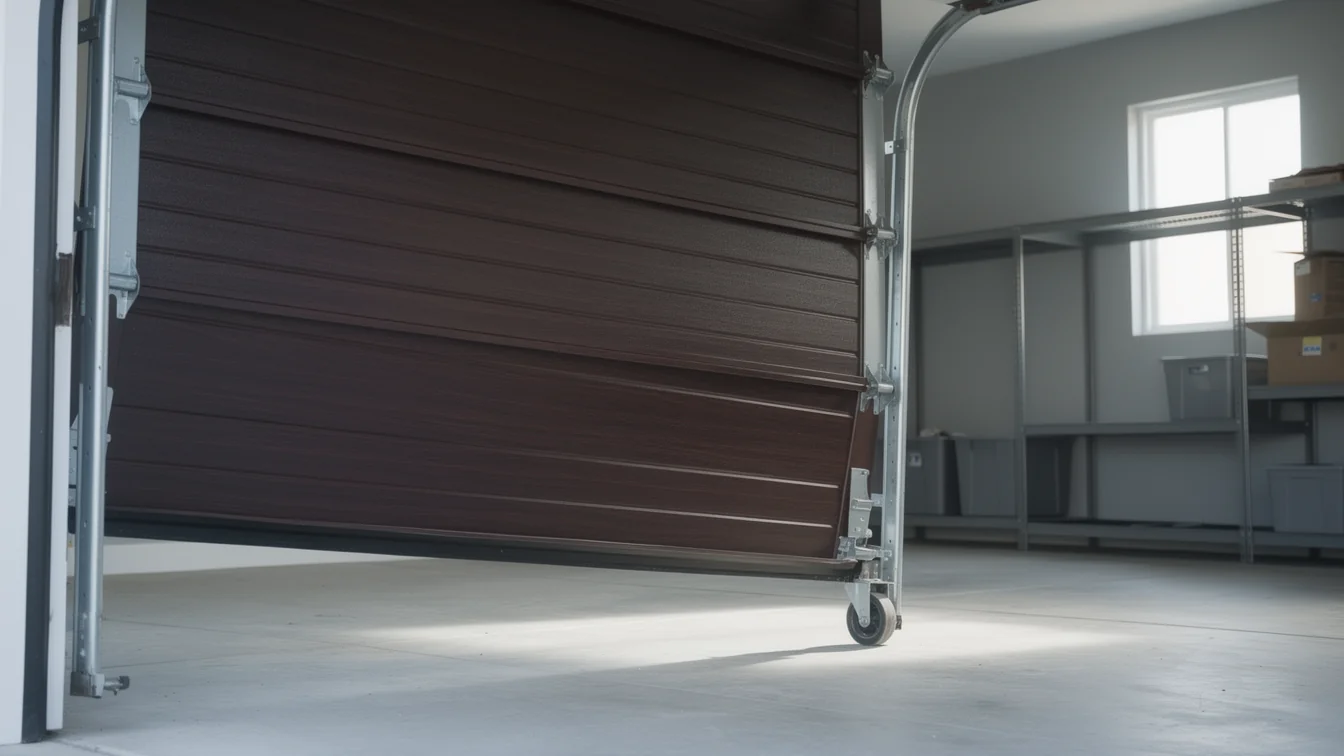
Why Your Garage Door Jumps the Track Here in Peachtree City
A look at why garage doors jump their tracks in Peachtree City, tied to the area's 1980s-90s housing stock and cold-moderate winter freeze-thaw cycles.
- Repairs & new doors
- Springs & openers
- Serving 5 nearby communities
What It Costs
We're not going to throw a number at you here, because what fixes an off-track door depends entirely on what knocked it off. Sometimes it's one bent section of track and a couple of rollers - a short job. Sometimes the bracket that holds the track to the jamb has pulled loose from the framing, and that's a different repair with different parts. If a cable came off a drum at the same time the door jumped, you're looking at a cable and track job together, not just one or the other.
What we can tell you honestly: we won't quote a price over the phone before we've seen the door. A lot of companies will, and a lot of those quotes change once the truck shows up. On a 1980s or 90s build, the track hardware is often original, which means we're sometimes matching brackets and rollers that aren't the same part number as what's sold today - that can add time to a job that looked simple on paper. If the track itself is bent badly enough, straightening it rarely holds; replacing that section is usually the honest call, not the upsell.
Season by Season
Peachtree City sits in a cold-moderate climate band, which means real winter swings - not Minnesota cold, but enough freeze-thaw cycling every year to work on metal and concrete. In late fall and winter, the slab under your track anchors contracts, and the wood or metal jamb the track bolts into moves with it, just slightly. On a door that's already got one loose bracket, that seasonal shift is often the thing that finally lets the roller walk out of the track.
Spring brings the opposite problem: humidity swings as the ground warms back up, and on older wood jambs that can mean a few degrees of twist in the frame that wasn't there in January. Summer is usually the quietest season for off-track calls around here - the hardware's settled into whatever position it's going to hold until the next freeze.
This isn't a once-a-year event. It's a slow accumulation. A track that's been bolted into a shifting jamb for fifteen winters doesn't fail because of one storm - it fails because the last of fifteen seasonal movements was the one degree too many.
The Situation
Housing in this service area mostly went up between 1961 and 2007, with the median build year landing around 1991, and the bulk of the stock across the twenty named communities we cover dates to the 1980s and 90s. That matters for this specific problem because track hardware from that era was almost always steel rollers running in single-bracket track mounts - serviceable, but not the nylon-roller, double-bracket setups that became standard later.
Steel rollers wear a groove into the track over years of use. Once that groove gets deep enough, the roller doesn't ride smoothly anymore - it catches, and a catching roller is exactly what jumps a track when the door's under any extra load, like a spring that's lost a little tension or a slightly misaligned opener arm. Single-bracket mounts also have less margin: one bracket working loose from slab movement is enough to pull an entire section of track out of line, where a double-bracket setup might tolerate it.
This is distinct from a newer-build problem. A door installed in the last decade with nylon rollers and reinforced brackets isn't fighting the same wear pattern, which is part of why off-track calls here skew toward the older side of that 1961-2007 range.
What Local Conditions Do
Put the housing stock and the climate together and you get a specific, recurring failure path, not a generic one. Original steel rollers from a 1980s or 90s build wear grooves into the track over two decades of use. Every winter, the cold-moderate freeze-thaw cycle shifts the slab and jamb that track is bolted to, by a small amount each time. A worn roller riding a track that's being nudged out of true a little more each season is the setup for a door that eventually jumps off.
This pattern shows up across the territory we work, not just in one subdivision. Senoia, Tyrone, and Turin are all about six miles out, Fairburn eleven, and most of that ground was built out in the same stretch as the area closer in - meaning the same hardware, the same climate exposure, and the same failure path. With roughly 21,470 owner-occupied houses in this service area, most dating to that 1961-2007 run, off-track calls cluster hard on the older side of that range rather than on newer construction, where reinforced brackets and nylon rollers are holding up better against the same seasonal movement.
Frequently asked questions
Why does my garage door only jump the track in winter?
Cold-moderate winters here put real freeze-thaw movement into the slab and door frame, shifting the bracket positions that hold your track in place by a small amount each cycle. On an older door with worn rollers or a loosening bracket, that seasonal movement is often the last push needed for the roller to leave the track.
Is a bent track always replaced, or can it be straightened?
A light bend can sometimes be worked back into shape, but a track bent badly enough to let a roller escape usually doesn't hold a straightening job for long. On most of the doors we see from the 1980s and 90s, replacing the bent section is the repair that actually lasts.
My house was built in the 1990s - is that why this keeps happening?
It can be. A lot of the housing stock in this area dates to that decade, and the steel rollers and single-bracket track mounts common then wear differently than what's used in newer builds. Worn rollers combined with seasonal frame movement are a common combination behind repeat off-track calls on homes from that era.
Can I push the door back onto the track myself?
We'd rather you didn't. A door off its track can still have spring tension loaded into it, and forcing it back on can bend the track further or let a cable slip. It's a short call for us to come look at it before you touch it.
Related garage door services in Peachtree City
More garage door guides
Book garage door service in Peachtree City
Call now or request a quote - tell us what the door is doing and where you are.