
Peachtree City, GA · Garage Door Service
When the Power Goes Out, What Happens to Your Opener
How opener age, a cold-moderate climate, and the 1980s-90s housing stock around Peachtree City combine to make power outages a real garage door problem here.
- Repairs & new doors
- Springs & openers
- Serving 5 nearby communities
What It Costs
We're not going to put a number here that doesn't hold up once a tech is standing in your driveway. What drives the cost on an opener-and-power-cut call is pretty consistent, though: how old the opener is, whether it already has a battery backup, and whether the outage left anything else damaged, like a drive gear that was mid-cycle when the power dropped.
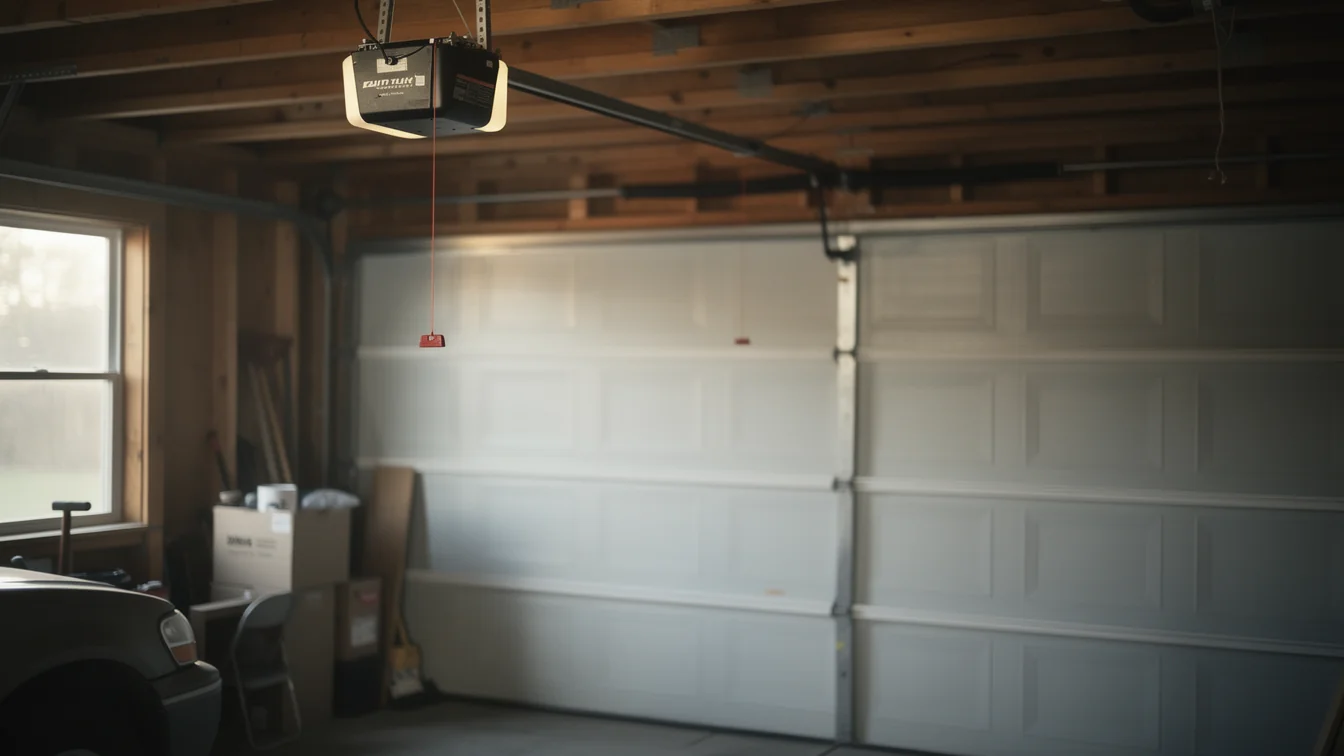
Most of the openers we find got installed somewhere between 1961 and 2007, with the typical install year landing around 1991. That's before battery backup was standard equipment, which means a lot of these units have no fallback at all when the grid goes down - you're pulling the red release cord and lifting the door by hand, every time.
Adding a backup battery to an existing opener costs less than replacing the whole unit, and for most of the openers we see out here, it's the honest answer. Replacement only makes sense when the opener itself is failing on its own terms - stripped gears, a dying circuit board - and the outage just happened to be what got you to call. We'll tell you which one you're looking at before we touch anything.
Season by Season
This area sits in a cold-moderate climate band, which shapes when these calls come in more than most people expect. Winter is when freezing rain and ice storms hit the power lines, and it's also when a steel track contracts enough to bind a roller that was already running a little dry. You can end up with both problems at once: the power's out and the door won't move smoothly even on manual release.
Spring and fall are calmer here - fewer weather-driven outages, more routine wear showing up on its own schedule. Summer brings its own round of storms and the outages that come with them, but the mechanical side of the door isn't fighting cold-stiffened grease the way it is in January.
The pattern we'd point out: if your opener has no battery backup, the two seasons that cause outages are also the seasons when you most need the door to still work - getting a car out before a storm, or getting one in during one. That's the real argument for backup power here, more than any sales pitch.
The Situation
Across the roughly 20 subdivisions and named areas we work in around here, most garage doors are still running openers installed sometime in the 1980s or 90s. That generation of opener was built to run on house current and nothing else. No battery, no manual override that doesn't require you to find the release cord in the dark, no way to open the door at all if the breaker trips or the lines go down.
With 55,441 households in the service area and 21,470 of those owning the house outright, a lot of families here depend on that garage door as the main way in and out. When the power outages and the opener has no backup, the door becomes a 150-pound panel you're lifting by hand - manageable for some doors, a real problem for a heavy insulated one.
This isn't a hypothetical. It's the age of the equipment matching up with a climate that produces outages. The two facts sit next to each other whether anyone planned it that way or not, and it's why battery backup conversations come up on almost every opener call we run in homes from this era.
What Local Conditions Do
Median household income in the area runs $62,381, and in practice that shows up in which repair people choose when an opener fails during an outage. More often than not, we see owners add a battery backup to an opener that's otherwise working fine rather than replace the whole unit - it's the repair that matches the budget and still solves the actual problem.
The cold-moderate climate does its own work on top of the housing stock. Ice storms are the outage driver most winters, and they tend to arrive right when a garage door's mechanical parts are already stiffer from the cold. An opener with no backup battery meets a track that's harder to move by hand, and that combination is what generates most of the calls we get tied to power loss.
One limitation worth saying plainly: a battery backup keeps the opener running through a short outage, but it's not built to run a door through a multi-day outage or a lightning strike that takes out the circuit board. If the outage is long or the damage is electrical, that's a different repair, and we'll tell you which one you've got.
Frequently asked questions
Does my garage door opener work at all during a power outage?
Not unless it has a battery backup installed. Most openers in this area were put in well before backup batteries were standard, so without one, the only way to open or close the door during an outage is the manual release cord, which disconnects the opener and lets you lift the door by hand.
Is it worth adding a battery backup to an older opener?
Usually yes, if the opener is otherwise running fine. It's a lower-cost fix than replacing the whole unit and solves the actual problem - no power during a storm. If the opener has other issues, like a dying circuit board, we'll say so instead of just selling a battery.
Why do outages seem to hit garage doors hardest in winter?
This area sits in a cold-moderate climate band, so winter brings the ice storms and freezing rain that knock out power. That's also when cold-stiffened tracks and rollers make manual operation harder, so you end up fighting the door and the outage at the same time.
Related garage door services in Peachtree City
More garage door guides
Book garage door service in Peachtree City
Call now or request a quote - tell us what the door is doing and where you are.